
What is FASD?
Fetal Alcohol Spectrum Disorders (FASD) are a group of diagnosable conditions that can occur in a person who was exposed to alcohol before birth (CDC, 2024). FASD is a lifelong condition that affects the brain and body in different ways. As many as 1 in 20 Americans may have an FASD (May, PA et al., 2018).
Each person with FASD has distinct challenges and strengths. Every person with FASD is unique.
FASD is an Umbrella Term
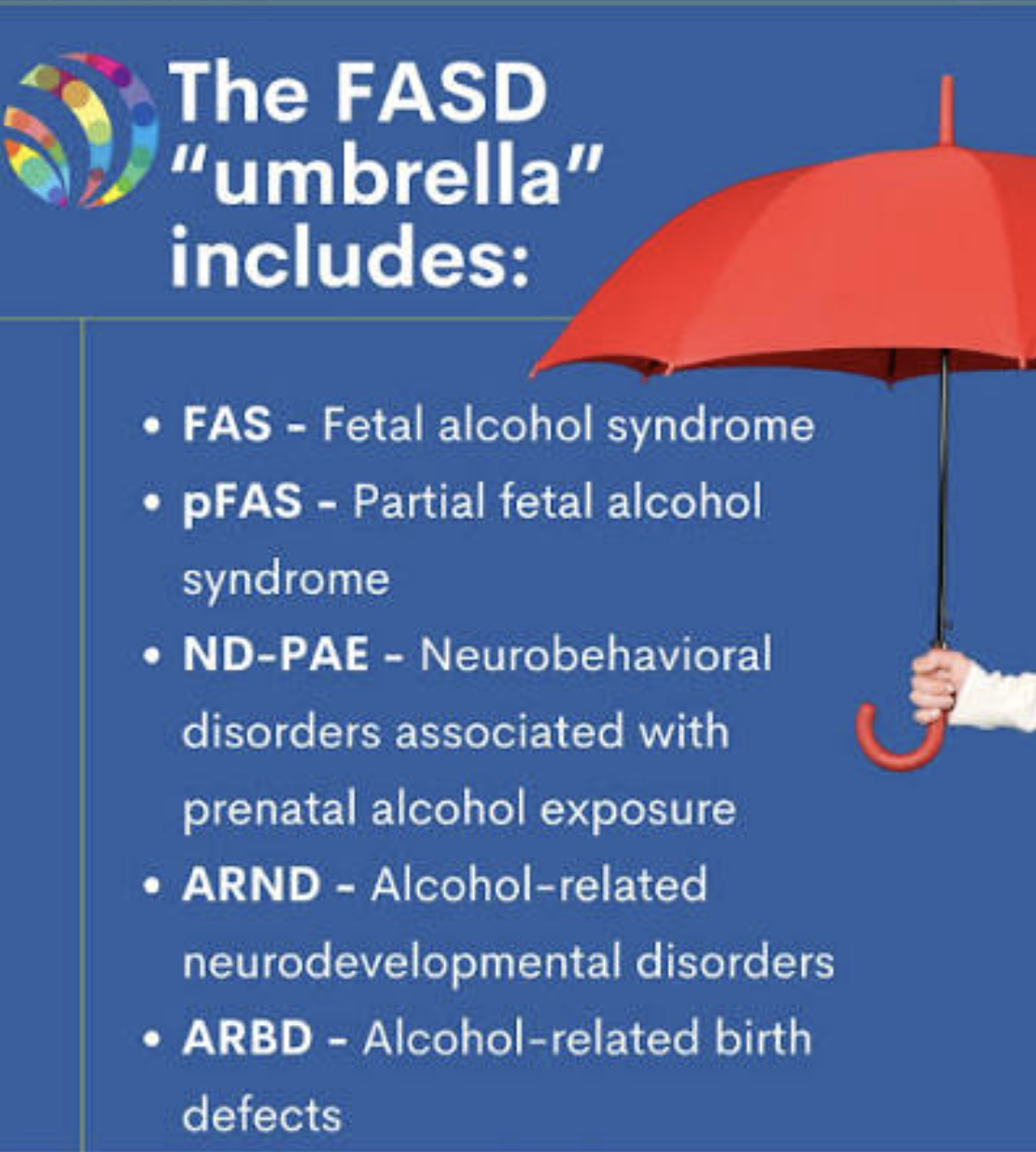
Fetal Alcohol Spectrum Disorder is an umbrella term — not a single clinical diagnosis. Under the umbrella of FASD:
Fetal Alcohol Syndrome (FAS)
People with FAS may have differences in growth, distinct facial features, and central nervous system differences that affect learning, memory, attention, communication, and sensory processing (CDC, 2024). With the right supports, individuals with FAS can participate meaningfully in educational settings and social environments.
Partial FAS (pFAS)
People with pFAS share some characteristics of FAS but may not meet all diagnostic criteria. They may have similar facial features and differences in growth, with central nervous system differences that vary in degree (CDC, 2024).
Alcohol-Related Neurodevelopmental Disorder (ARND)
People with ARND may experience differences in intellectual functioning and learning. They may benefit from additional support in areas such as math, memory, attention, planning, and judgment (Mattson, SN et al., 2019).
Alcohol-Related Birth Defects (ARBD)
People with ARBD may have physical differences or conditions affecting the heart, kidneys, bones, or auditory system (CDC, 2024).
Neurobehavioral Disorder Associated with Prenatal Alcohol Exposure (ND-PAE)
Recognized in the DSM-5 in 2013, individuals with ND-PAE may experience difficulties with planning, memory, emotional regulation, and adapting to daily routines (Mattson, SN et al., 2019). With appropriate support, many individuals with ND-PAE can develop effective coping strategies.
Getting an FASD Diagnosis
If you are seeking an FASD diagnosis for yourself or a family member, ask your healthcare provider for a referral to a specialist — such as a developmental pediatrician, psychologist, or clinical geneticist (CDC, 2024). Some cities have clinics with staff specially trained to diagnose and support individuals with FASD. You can find a list of specialists in the FASD United Resource Directory.
Getting a diagnosis can be an emotional process. It may be helpful to connect with peers and support groups who understand what you are going through. The FASD United Family Navigators provide personalized one-on-one peer support, referrals to vetted resources, and assistance with medical, educational, and disability benefits.
Getting an FASD diagnosis can help individuals and their loved ones better understand their strengths and challenges. Early intervention services can be especially helpful for children ages 0–3 (Waite, D & Burd, L., 2023).
For further resources, visit: Resources
Visit Get Support to get in touch with our team
Source: FASD United FASD Basics Fact Sheet, published March 2025.